
How to Create an Online Store in Sri Lanka: The Definitive 2025 Guide
Written by The Tool Audit
Last updated on September 30, 2025
Introduction: Why Sri Lanka’s E-commerce Moment is Now
The year 2025 marks a pivotal inflection point for Sri Lanka’s digital economy. After a period of unprecedented economic challenges, the nation is witnessing fertile ground for entrepreneurial growth. For aspiring entrepreneurs and established businesses, this moment represents a strategic window of opportunity that is unlikely to be repeated.
Sri Lanka’s e-commerce market generated an estimated revenue of US$2.6 billion in 2024, with projections indicating continued expansion. At the start of 2025, internet penetration stood at a significant 53.6%, representing 12.4 million users—an increase of 7% from the previous year. This expanding digital population is mainly mobile-first. A staggering 82% of all online orders in Sri Lanka are now placed via smartphones.
The current landscape is defined by the convergence of two powerful forces. First, the post-crisis economic recovery. Second, the digital habits forged during the pandemic-era lockdowns have become deeply entrenched. The forced shift to online purchasing was not a temporary adaptation but a period of mass consumer education and habituation.
Consequently, as consumers regain financial confidence, their spending is being channeled through these newly established digital pathways. This creates a more potent and sustainable growth for e-commerce. Businesses entering the market in 2025 are not just tapping into a growing sector; they are aligning with a new default consumer behavior.
However, navigating this promising landscape requires a nuanced strategy. Entrepreneurs face a critical decision at every step: choosing between powerful, globally recognized tools that may lack local customization, and tailored local solutions that may have different feature sets or scalability. We will guide you with definitive roadmap for 2025, providing an evidence-based analysis of every crucial stage of creating an online store in Sri Lanka—from legal registration and platform selection to mastering the unique local payment and logistics ecosystems.
The Foundation – Legally Structuring Your Online Business in 2025
Before a single product is listed or a marketing campaign is launched, a solid legal and financial foundation must be established. This initial phase is critical for long-term success. In Sri Lanka, this involves two primary steps: selecting the appropriate business structure and navigating the country’s national tax system.
1.1 The First Step: Choosing Your Business Structure
First, all new e-commerce ventures in Sri Lanka should select a business structure. The decision typically comes down to two primary options: a Sole Proprietorship or a Private Limited (Pvt) Ltd. Company.
Sole Proprietorship: The Agile Start
A Sole Proprietorship is the simplest, fastest, and most cost-effective way to strat a business in Sri Lanka. It is owned and managed by a single individual, and there is no legal distinction between the owner and the business. This structure is ideal for individual entrepreneurs, home-based businesses, and small-scale sellers who are testing a business idea and prioritize speed and minimal bureaucracy.
The registration process is manual and must be completed at the Divisional Secretariat office corresponding to the business’s location; online registration is not currently available for this entity type. The key steps involve:
- Name Selection: If the business operates under a name different from the owner’s full legal name (e.g., “Ceylon Crafts” instead of the owner’s name), it must be registered A name check can be performed online via the government’s search tool to ensure it is unique.
- Document Submission: The applicant must submit a completed Business Registration Application (Form BNR-01), a certified copy of their National Identity Card (NIC), a Grama Niladhari report certifying the business location, and proof of the business address (such as a utility bill or lease agreement).
- Fee Payment: A nominal registration fee, which varies by Divisional Secretariat, is required upon submission.
While simple, the primary drawback of a sole proprietorship is unlimited liability. Business debts and legal obligations are the personal responsibility of the owner, putting personal assets at risk.
Private Limited (Pvt) Ltd. Company: Built for Growth
Registering as a Private Limited Company establishes the business as a separate legal entity, distinct from its owners (shareholders). This is the most robust and scalable option, offering the crucial benefit of limited liability, which protects the personal assets of the owners from business debts and lawsuits. It is the recommended structure for businesses with ambitions for growth, plans to seek investment, or those that will carry significant inventory.
The registration process has been modernized and is now handled entirely online through the e-Registrar of Companies (eROC) portal. The key steps include:
- Name Reservation: An application to reserve a unique company name must be submitted via the eROC portal. This process typically takes 2-3 business days for approval.
- Document Preparation: The following forms must be prepared and submitted electronically:
- Form 1: Application for Registration of a Company.
- Form 18: Consent and Certificate of each Director.
- Form 19: Consent and Certificate of the Company Secretary.
- Articles of Association: This legal document outlines the rules governing the company’s internal management. A standard template is available, or a custom version can be drafted.
- Submission and Payment: All documents are uploaded to the eROC portal, and the registration fees are paid online. The fees for a Private Limited Company registration total approximately LKR 11,500 plus VAT.
After incorporation, the company must give public notice in the Government Gazette and a daily newspaper within 30-60 days. This structure provides greater credibility and is essential for securing formal financing or investment.
1.2 Navigating Sri Lanka’s 2025 Tax Landscape: TIN and the New VAT Rules
For any online business, this begins with obtaining a Tax Identification Number (TIN) from the Inland Revenue Department (IRD). A TIN is mandatory for all registered businesses and is required for opening a corporate bank account and filing tax returns.
A more significant impact for e-commerce businesses in 2025 is the introduction of a new tax on foreign digital services. The government, through the Value Added Tax (Amendment) Act, will impose an 18% Value Added Tax (VAT) on digital services provided by non-resident companies to Sri Lankan consumers. While the implementation date has been postponed to April 1, 2026, to allow for industry preparation, businesses planning their 2025 budgets must account for this impending cost.
This new tax has direct and significant implications for the operational costs of an online store. It applies to a wide range of essential services that many Sri Lankan e-commerce businesses procure from international providers, including:
- E-commerce Platforms: Subscription fees for platforms like Shopify.
- Cloud Computing and Hosting: Payments to international web hosting providers.
- Digital Marketing: Advertising expenditure on platforms such as Meta (Facebook, Instagram) and Google.
- Software as a Service (SaaS): Subscriptions for marketing, accounting, or design software.
The cost of using an international platform like Shopify, for example, will effectively increase by 18%. This creates a powerful financial drawback to consider local alternatives, such as a WooCommerce store built on a local hosting provider, as these domestic transactions would not be subject to this specific cross-border VAT. You must model this tax into their financial projections from day one, as it could be a deciding factor in the selection of their entire technology stack.
For local sales, businesses must also be aware of the standard VAT registration thresholds. It is mandatory to register for VAT with the IRD if the value of taxable goods or services exceeds LKR 15 million in a single quarter or LKR 60 million over a 12-month period.
The Engine Room – An Authoritative Audit of E-commerce Platforms
The choice of an e-commerce platform is the most important technological decision an online entrepreneur should make. The Sri Lankan market presents a distinct choice between globally dominant, all-in-one solutions and highly customizable, open-source systems that offer greater local integration. Next we will discuss about evidence-based audit of the three leading contenders: Shopify, WooCommerce, and Wix.
2.1 Shopify: The All-in-One Powerhouse
Shopify is a fully hosted, software-as-a-service (SaaS) platform that has established itself as the global leader for businesses seeking a quick, reliable, and hassle-free launch. Its main feature is simplicity; it handles all technical aspects of hosting, security, and maintenance, allowing merchants to focus purely on selling.
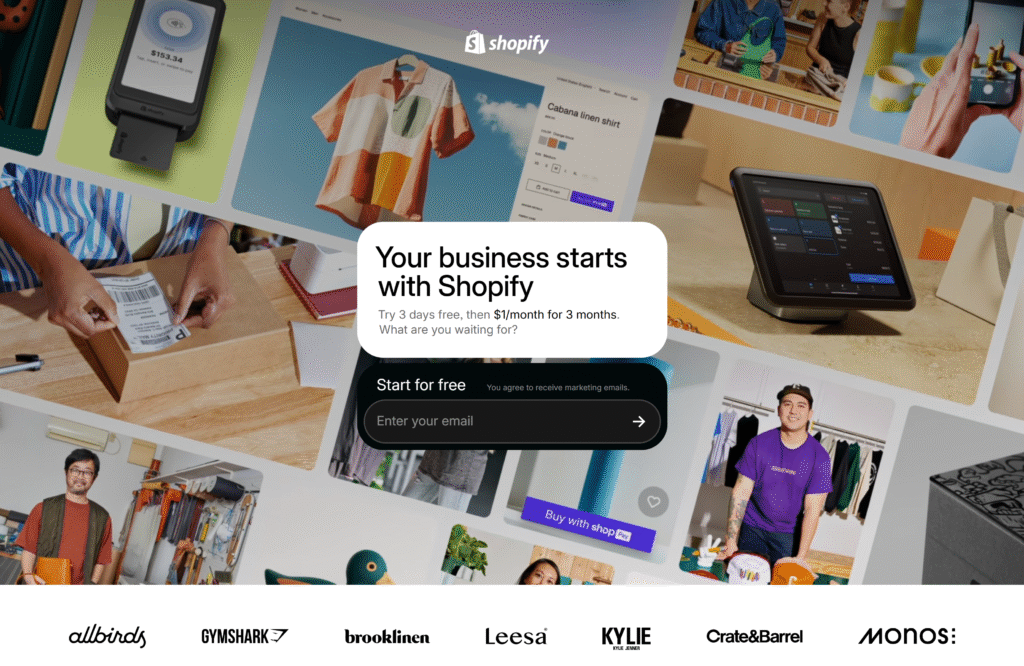
- Ease of Use & Setup: Shopify is renowned for its simpler and more efficient setup process, making it the top recommendation for beginners. Its intuitive interface, professional themes, and guided onboarding allow a merchant to go from sign-up to a live, functional store with minimal technical expertise.
- Features & Ecosystem: The platform comes equipped with a powerful suite of built-in e-commerce tools, including a world-class, conversion-optimized checkout process, robust inventory management, and comprehensive analytics. Its key strength lies in its vast App Store, which offers over 8,000 applications to extend functionality. For our Sri Lankan market, its seamless multichannel integration is particularly valuable, allowing merchants to easily sell directly on social media platforms like Facebook, Instagram, and TikTok—tapping directly into the country’s strong social commerce trend.
- Pricing & True Cost in Sri Lanka: Shopify operates on a monthly subscription model. The most common plans are Basic (approximately $29 USD/month when billed annually) and Shopify (approximately $79 USD/month when billed annually). However, merchants in Sri Lanka must factor in two critical additional costs:
- The 18% Digital Services VAT: As a non-resident provider, Shopify’s subscription fees will be subject to the new 18% VAT, increasing the effective monthly cost.
- Third-Party Transaction Fees: A major limitation is that Shopify Payments, its native payment gateway, is not available in Sri Lanka. This forces merchants to use external payment gateways, for which Shopify charges an additional transaction fee on top of the gateway’s own fees. This fee is
2% on the Basic plan and 1% on the Shopify plan. This can significantly impact profit margins, especially for businesses with high sales volume.
2.2 WooCommerce: The Open-Source Champion.
WooCommerce is not a standalone platform but a free, open-source plugin that transforms any WordPress website into a powerful e-commerce store. It is the most popular platform in Sri Lanka, mainly due to its unparalleled flexibility, full ownership of data, and deep integration with the local business ecosystem.
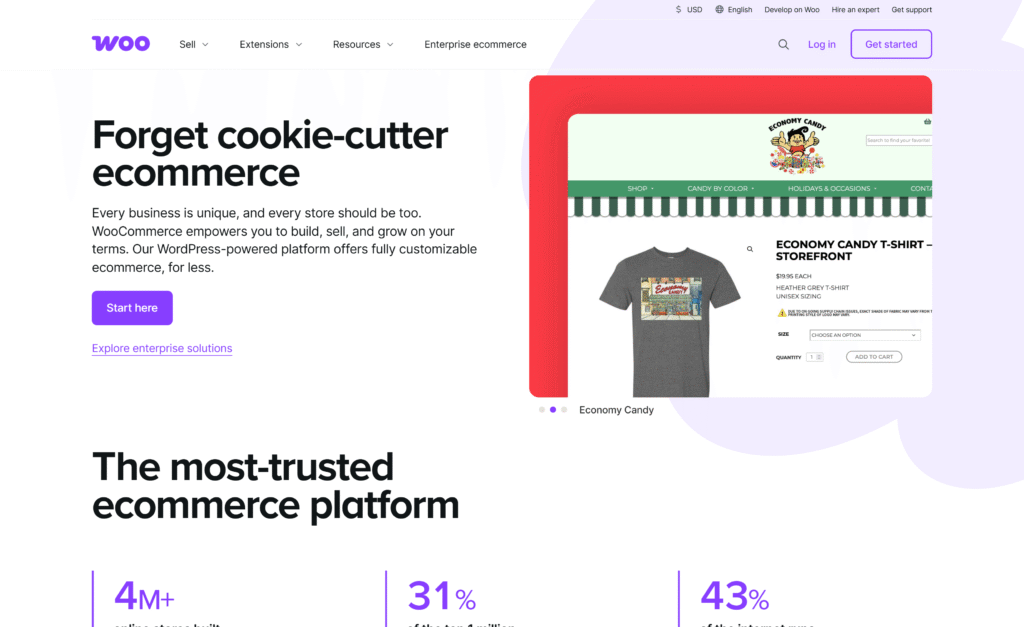
- Ease of Use & Setup: WooCommerce presents a steeper learning curve than Shopify. It requires users to manage their own hosting, install WordPress, and configure the plugin and its extensions. This approach is best suited if you have some technical comfort or are willing to hire a developer.
- Features & Ecosystem: The platform’s core strength is its limitless customization. With access to over 60,000 WordPress plugins and thousands of WooCommerce-specific extensions, merchants can build virtually any feature imaginable. This extensibility also gives it superior Search Engine Optimization (SEO) capabilities, making it the preferred choice for content-driven brands focused on long-term organic growth.
- Pricing & True Cost in Sri Lanka: While the WooCommerce plugin itself is free, the total cost of ownership is composed of several parts:
- Domain Name & Hosting: Annual costs typically range from LKR 5,000 to LKR 20,000.
- Theme: While free themes are available, premium themes often cost a one-time fee of $50-$200.
- Premium Plugins: Essential features like advanced shipping calculations or payment gateway integrations often require paid extensions, which can range from $50 to $150 annually per plugin.37
A realistic annual budget for a professional WooCommerce store in Sri Lanka would start from approximately LKR 50,000, making it potentially more cost-effective in the long run compared to Shopify’s recurring fees.36
- Local Relevance: This is where WooCommerce excels. It integrates seamlessly with all major Sri Lankan payment gateways (like PayHere and WEBXPAY) and local courier services, often via dedicated plugins, providing a smoother, more localized experience for both the merchant and the customer.33
2.3 Wix: The Visual Builder for Small Businesses
Wix known for its user-friendly, drag-and-drop editor, making it one of the easiest platforms for complete beginners to create a visually appealing website. While it offers e-commerce functionality, it is best positioned as an entry-level solution for small businesses or artists with limited product catalogs.
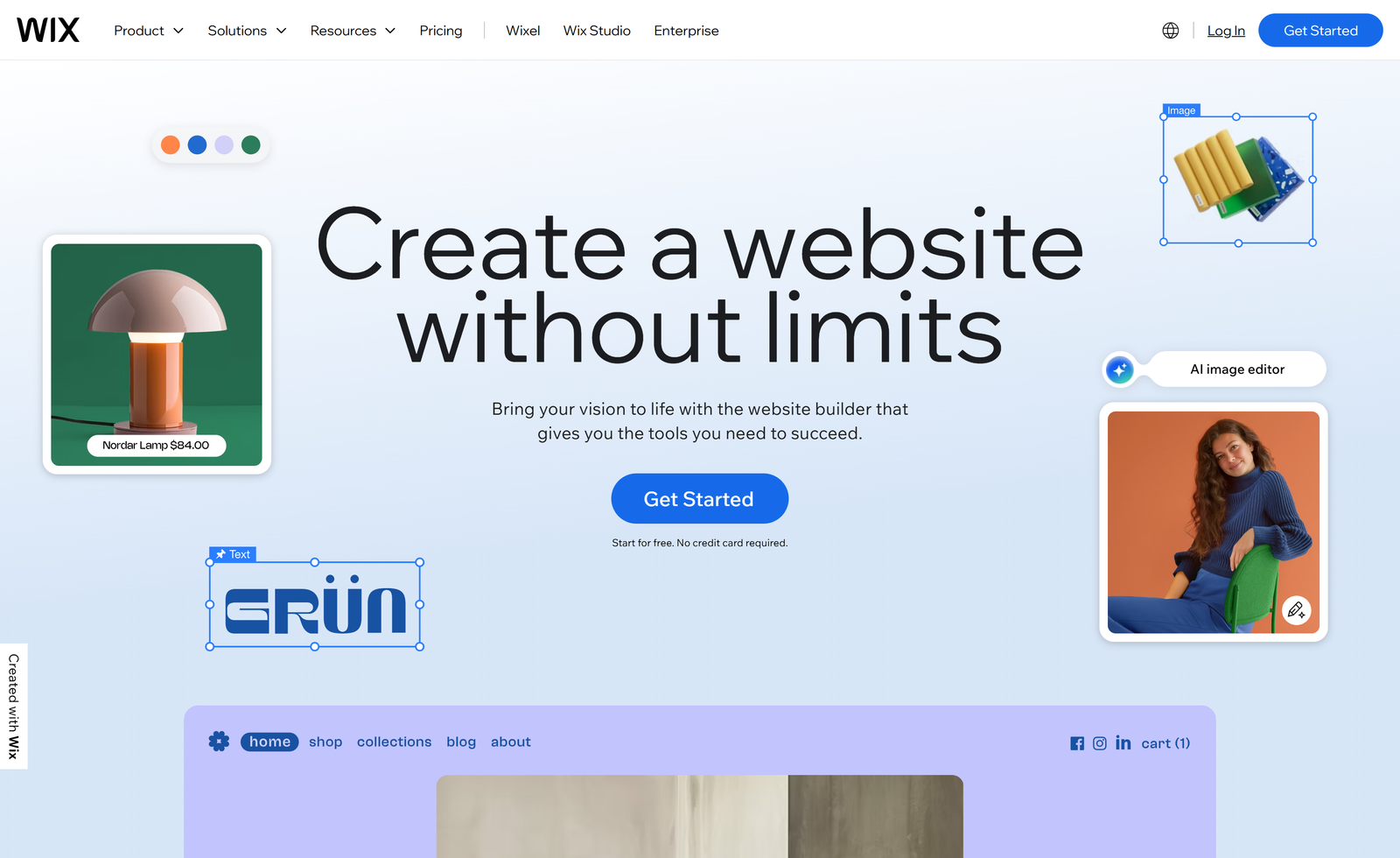
- Ease of Use & Setup: Wix offers the most intuitive website-building experience, allowing users to visually design their store without any code.
- Features & Ecosystem: Wix provides a good range of built-in e-commerce features. However, it faces limitations when it comes to scalability. It struggles to handle large product catalogs (limited to 50,000 products) and high traffic volumes as efficiently as Shopify or WooCommerce. Its sales and marketing tools, while adequate for small shops, lack the depth and power of its more specialized competitors.
- Pricing & True Cost in Sri Lanka: Wix offers several e-commerce subscription plans that are competitively priced for the entry-level market. Like Shopify, its subscription fees will be subject to the 18% digital services VAT.
- Local Relevance: Wix has a growing user base in Sri Lanka. However, its integration with local payment gateways and logistics providers is less mature than that of WooCommerce, which can create friction in the checkout and fulfillment process.45
E-Commerce Platform Showdown (2025): Shopify vs. WooCommerce vs. Wix for Sri Lankan Sellers
| Criteria | Shopify | WooCommerce | Wix |
| Ease of Use & Setup | Excellent (9/10): Fully hosted, intuitive interface. Ideal for beginners. | Good (7/10): Requires self-hosting and configuration. Steeper learning curve. | Excellent (9.5/10): Simple drag-and-drop editor. The easiest for non-technical users. |
| Scalability & Performance | Excellent (9/10): Built to handle high traffic and large order volumes. | Excellent (9/10): Highly scalable with the right hosting. Full control over performance. | Fair (6/10): Best for small to medium inventories. Can face performance issues at scale. |
| Customization & Flexibility | Good (7.5/10): Highly customizable through apps, but core functionality is locked. | Excellent (10/10): Unlimited customization through open-source code and a vast plugin ecosystem. | Good (7/10): Visually flexible but limited backend and feature customization. |
| Local Payment Integration | Fair (6/10): No native Shopify Payments. Relies on third-party apps with extra fees. | Excellent (9.5/10): Seamless native integration with all major Sri Lankan gateways like PayHere & WEBXPAY. | Fair (6.5/10): Limited direct integrations; may rely on providers like Paymentwall. |
| Local Shipping Integration | Good (7/10): Integrates with local couriers via third-party apps. | Excellent (9/10): Strong support for local courier plugins and custom shipping rules. | Fair (6/10): Limited native options, relies on general shipping apps. |
| SEO Capability | Good (8/10): Solid built-in SEO tools, but less control than WordPress. | Excellent (9.5/10): The best platform for SEO due to its WordPress foundation and powerful plugins. | Good (7.5/10): SEO tools have improved but still lag behind WordPress. |
| True Annual Cost (Estimate) | Moderate to High: ~$480+ (Basic Plan + Fees + VAT). Costs scale with sales due to transaction fees. | Low to Moderate: ~$400+ (Hosting + Domain + Premium Plugins). More predictable costs. | Low to Moderate: ~$400+ (Plan + VAT). Affordable entry point. |
| Best For | Beginners, dropshippers, and brands prioritizing speed-to-market and social commerce. | Businesses wanting full control, focusing on SEO and content, and aiming for long-term, cost-effective scalability. | Small businesses, artists, and service providers with a small product catalog who prioritize visual design. |
Performance is Everything – Selecting High-Speed Web Hosting
For an online store, website speed is not a feature; it is a fundamental requirement. A slow-loading website directly translates to lost revenue through higher bounce rates, lower conversion rates, and penalties in search engine rankings.
3.1 The Geographic Imperative: Why Server Location is Non-Negotiable
The single most important factor determining website speed for a Sri Lankan audience is the physical location of the web server. Latency (the total time needed for a packet of data to travel.) is directly proportional to the physical distance.
A website hosted on a server in the United States or Europe will inevitably feel sluggish to a local user, regardless of how optimized the site is. For Sri Lanka, the two most optimal data center locations are Singapore and Mumbai, India. This geographical advantage directly challenges the claims of some local providers who argue that only servers physically located within Sri Lanka can offer optimal performance; the network connectivity from regional hubs like Singapore is often superior.
3.2 Case Study: A Real-World Performance Audit of Hostinger
Next we will incorporate a real-world audit of Hostinger, a global provider popular and one of the best web hosting service in Sri Lankan market due to its competitive pricing and strong regional performance.The audit involved purchasing a ‘Business’ plan and conducting quantitative benchmarks simulating access from the Singapore region.
The results demonstrate top-tier performance that defies the provider’s budget-friendly price point:
- Largest Contentful Paint (LCP): This is the Google Core Web Vital and it measures the time it takes for the largest visual element on the page to load. Hostinger consistently achieved LCP times between 0.6 and 1.3 seconds, well below the 2.5-second threshold for a “good” user experience. This means visitors see meaningful content almost instantly.
- Time to First Byte (TTFB): This measures the raw server response time. Hostinger’s TTFB was typically in the 131ms to 271ms range, indicating a highly responsive and well-optimized server infrastructure.
- Fully Loaded Time: The total time for the entire page to load was often as low as 0.8 seconds, providing an instant browsing experience.
This high performance is due to specific technology stack designed for speed, including the use of LiteSpeed Web Servers, which are demonstrably faster than the older Apache servers used by many competitors, and ultra-fast NVMe storage, which offers significantly higher read/write speeds than traditional SSDs.
But the significant weakness of Hostinger is the lack of live adequate and instant customer support. Widespread user feedback points to slow and ineffective support for complex technical issues.
3.3 The True Cost of Hosting: Decoding Introductory Offers and Renewal Hikes
The web hosting industry is known for its aggressive introductory pricing, which often masks a much higher long-term renewal cost. It is crucial for businesses to look beyond the advertised monthly rate and calculate the true cost of ownership over a multi-year period.
Using the Hostinger ‘Business’ plan as a model, the long-term cost can be calculated as follows:
- Introductory Cost (48 months): $3.99/month x 48 = $191.52
- Renewal Cost (next 12 months): $13.99/month x 12 = $167.88
- Total Cost over 5 years (60 months): $191.52 + $167.88 = $359.40
- Average Monthly Cost over 5 years: $359.40 / 60 = $5.99 per month
This calculation reveals that while the renewal price is significantly higher, the average monthly cost over a typical business planning cycle remains highly competitive. But all businesses must budget for this price jump after the initial term to avoid unexpected operational expenses. Read our complete Hostinger review
Getting Paid – Mastering Sri Lanka’s Unique Payment Ecosystem
Successfully converting a visitor into a paying customer hinges on a smooth, trustworthy, and familiar checkout experience. In Sri Lanka, the payment landscape is hybrid, traditional physical payments and emerging digital solutions. Understanding this is essential for maximizing sales and building customer confidence.
4.1 The COD Conundrum: Why Cash on Delivery Still Reigns in 2025
Despite the global shift towards digital payments, Cash on Delivery (COD) remains the dominant payment method for e-commerce in Sri Lanka. According to the 2025 Digital Outlook report, 52% of online shoppers prefer COD, a figure that has notably increased from 48% in the previous year. This is a reflection of the market’s current stage of digital trust.
The persistence of COD is driven by several key factors:
- Lack of Trust and Fear of Scams: A significant portion of the consumer base remains wary of online transactions, fearing potential fraud, non-delivery of goods, or receiving products that do not match their online description. COD mitigates this risk by allowing customers to physically inspect the product before their payments.
- The “No-Commitment” Advantage: COD offers ultimate flexibility. Shoppers can reject an order at the doorstep if they are unsatisfied, a powerful form of consumer protection that digital payments cannot offer in the same immediate way.
- Digital Payment Hesitation: Concerns about sharing credit card details online and issues with complex or delayed refund processes for digital payments further reinforce the appeal of cash.
For businesses, this dominance of COD has critical operational implications. It necessitates a partnership with courier services that have robust cash handling capabilities, introduces complexities in managing returns, and can impact cash flow, as revenue is only realized after a successful delivery and settlement cycle.
4.2 The Digital Shift: A Comparative Analysis of Local Payment Gateways
While COD is essential, offering a seamless digital payment option is crucial for capturing the growing tech-savvy consumers and improving operational efficiency. The market has moved beyond cumbersome and expensive traditional bank Internet Payment Gateways (IPGs) towards more agile, third-party payment aggregators. These platforms offer easier integration, more transparent pricing, and support for a wider range of payment methods.
The leading local payment gateways for Sri Lankan businesses in 2025 are:

- PayHere: As a Central Bank-approved provider, PayHere has become a market leader, known for its easy setup, no setup fees, and out-of-the-box plugins for platforms like WooCommerce and Shopify. It offers a tiered pricing model (Lite, Plus, Premium) to suit businesses of different sizes, with transaction fees ranging from 2.69% to 3.30%. It supports a comprehensive range of payment methods, including all major credit/debit cards, mobile wallets like eZcash and mCash, and internet banking services. However, that a 2022 data breach may still influence public perception of its security.
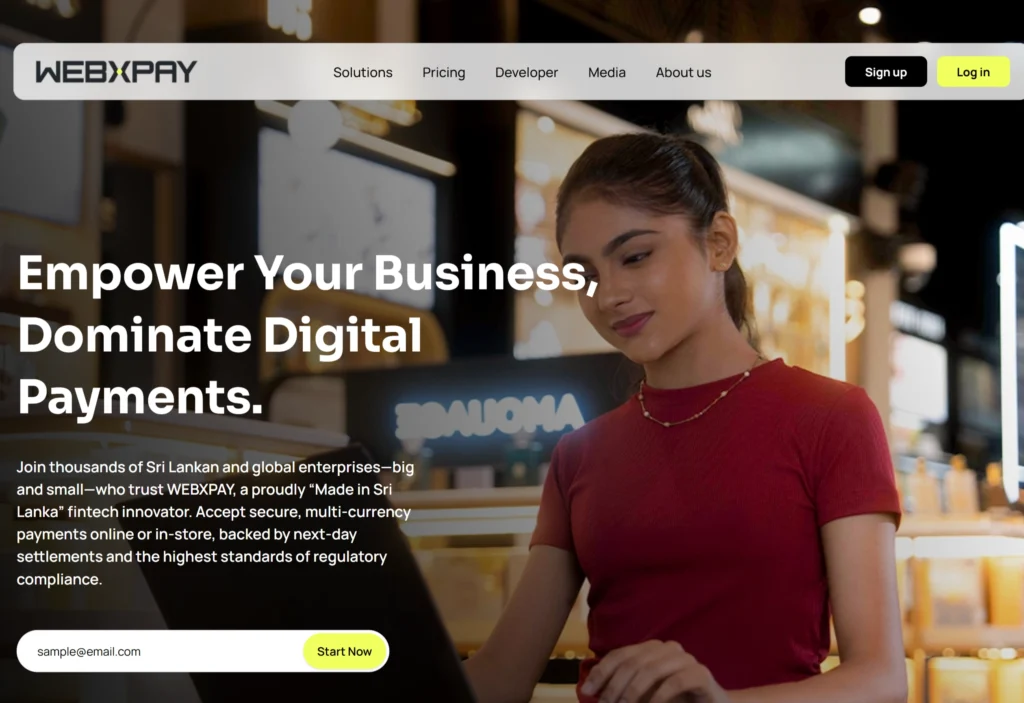
- WEBXPAY: Another major player focusing on SMEs, WEBXPAY provides integrations for major e-commerce platforms and supports over 14 payment methods, including Visa, Mastercard, Amex, and local mobile wallets. It operates on a tiered model with varying subscription fees and transaction rates, generally between 2.3% and 2.8%.
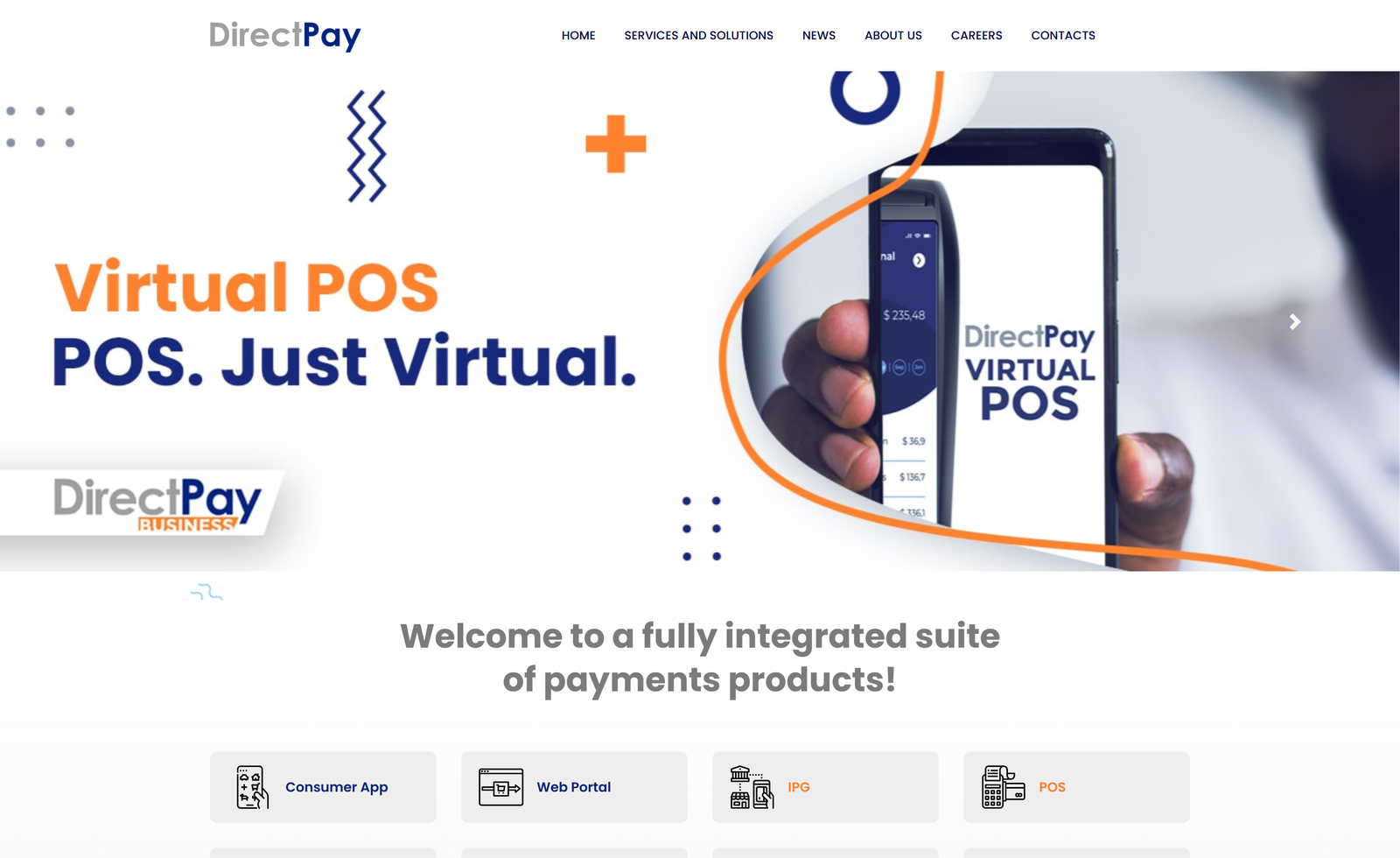
- DirectPay: A rapidly growing FinTech company, DirectPay offers competitive pricing with transaction fees ranging from 2.6% to 3.5% and monthly service fees on its higher tiers. It provides plugins for platforms like WooCommerce and Shopify and supports recurring payments (tokenization), making it a strong option for subscription-based businesses.
For larger enterprises, traditional Bank IPGs from institutions like Sampath Bank or Commercial Bank remain an option. While they often involve significant setup fees (LKR 15,000+) and high annual maintenance fees (LKR 30,000 – LKR 90,000), they can sometimes offer slightly lower transaction rates (around 2.5% – 4%) for high-volume businesses. See our audit about best payment gatways in sri lanka
Sri Lankan Payment Gateway Matrix (2025)
| Criteria | PayHere | WEBXPAY | DirectPay | Sampath Bank IPG |
| Setup Fee | None | LKR 15,000 | None | LKR 15,000 |
| Annual/Monthly Fee | LKR 0 (Lite), LKR 3,990/mo (Plus), LKR 9,990/mo (Premium) | LKR 2,490/yr (Economy) to LKR 8,990/yr (Business) | LKR 0 (Starter), LKR 3,000/mo (Pro), LKR 8,000/mo (Privilege) | LKR 45,000/yr |
| Transaction Rate (Local) | 3.30% (Lite), 2.99% (Plus), 2.69% (Premium) | 2.8% (Economy), 2.3% (Business) | 3.5% (Starter), 2.9% (Pro), 2.6% (Privilege) | 3% |
| International Rate Surcharge | +1.0% | Varies | +1.5% | +1.0% (Total 4%) |
| Supported Platforms | WooCommerce, Shopify, OpenCart, Magento, Mobile SDKs | WooCommerce, Shopify, OpenCart, APIs, SDKs | WooCommerce, Shopify, OpenCart, Mobile SDKs | WooCommerce, OpenCart, Magento, Prestashop |
| Settlement Time | 2 business days | T+1 (Next business day) | Not specified | 2 working days |
| Key Advantage | Most popular, no setup fee, broad platform support. | Fast T+1 settlements, established SME focus. | Competitive rates, strong recurring payment features. | Direct bank integration, trusted brand for large enterprises. |
The Final Mile – A Guide to E-commerce Logistics and Fulfillment
In e-commerce, the final interaction with the customer is often with the delivery driver. A fast, reliable, and transparent delivery process builds trust and encourages repeat business, while a poor one can permanently damage a brand’s reputation.
The Delivery Challenge: Overcoming Sri Lanka’s Last-Mile Hurdles
Operating an e-commerce business in Sri Lanka comes with a unique set of logistical challenges. While the courier network is well-developed in Colombo and its suburbs, reaching rural areas can introduce significant delays and increase costs. This problem is a major drawback for businesses aiming for island-wide reach.
Furthermore, the prevalence of COD requires a robust reverse logistics process. Failed delivery attempts or customer rejections at the doorstep mean that products must be returned to the merchant, incurring additional costs and administrative overhead. This makes the choice of a courier partner a strategic one. Businesses must look for providers that not only offer competitive rates but also have a high delivery success rate, transparent tracking, and efficient cash handling processes. A clear and fair return policy, prominently displayed on the website, is also essential for managing customer expectations and building trust.
5.2 Evaluating Local Courier Services for E-commerce
Several domestic courier companies in Sri Lanka have developed specialized services to the growing e-commerce market. When evaluating a potential partner, key considerations should include their island-wide network coverage, their process for handling COD, and the speed at which they remit COD collections back to the merchant.
- Koombiyo Delivery: Having established itself as a key player in the e-commerce space, Koombiyo offers what it claims are the lowest rates for both COD and prepaid deliveries. Its key advantages for online businesses include a fast,
Weekly cash settlement cycle, which is crucial for the cash flow of small businesses, and a policy of making three delivery attempts before returning a package, which helps to improve the success rate od delivery and reduce returns. Their pricing is transparent, with rates such as LKR 150 for Colombo and LKR 290 for outstation cities like Kandy.
- Domex: As one of the largest domestic courier services with over 60 branches, Domex offers extensive island-wide coverage and significant operational capacity. Their e-commerce solution includes COD handling, daily delivery status updates, and a cash settlement cycle of every 15 days. Their established network makes them a reliable choice for businesses needing consistent, large-scale delivery capabilities.
- PromptXpress: Founded in 2015 by industry veterans, PromptXpress focuses on providing an efficient and trustworthy service with a strong island-wide network. They offer 24-hour delivery across the country and a same-day delivery service for major towns, which can be a key competitive advantage. However, it is worth noting that some public reviews indicate mixed experiences with customer service, which should be a factor in the evaluation process.
- Sri Lanka Post: The national postal service has adapted to the digital age by introducing a modernized Cash on Delivery service specifically for online businesses. Leveraging its unparalleled network that reaches every corner of the island, it can be a viable and cost-effective option, particularly for reaching customers in remote areas that private couriers may service less frequently.
5.3 Platform Integration: Automating Your Shipping Workflow
To move beyond manual data entry and streamline the fulfillment process, businesses should leverage technology to connect their e-commerce platform directly with their chosen courier. This integration automates key tasks, saving time and reducing the risk of human error.
On Shopify, merchants can use apps from the Shopify App Store, such as the Colombo City Express app, which directly integrates the store with the courier’s client portal. This allows for the automatic creation of orders in the courier’s system, generation of shipping labels, and real-time tracking updates.
For WooCommerce, the open-source nature of the platform allows for a wide variety of shipping plugins. These can range from general-purpose tools that manage shipping labels and tracking for multiple carriers (like ShipStation or Easyship) to custom-developed plugins that integrate directly with a specific local courier’s API. This automation is key to scaling operations efficiently as order volumes grow.
Local Courier Service Comparison for E-commerce (2025)
| Criteria | Koombiyo Delivery | Domex | PromptXpress | Sri Lanka Post |
| Island-wide Coverage | Extensive, with 80+ branches. | Excellent, with 60+ branches and a large fleet. | Strong island-wide network. | Unmatched, reaching every location in the country. |
| COD Handling | Core service, heavily focused on e-commerce. | Yes, a key feature of their e-commerce delivery service. | Yes, offered as part of their standard services. | Yes, through their modernized COD service. |
| COD Settlement Speed | Fast (Weekly) | Standard (Every 15 days) | Not publicly specified. | Not publicly specified. |
| Platform Integration | No official Shopify/WooCommerce app found, likely API-based. | API documentation available for integration. | No official plugins found. | No official plugins found. |
| Key Advantage | Fast cash settlement and low rates tailored for e-commerce startups. | High reliability, large capacity, and established corporate reputation. | Offers same-day delivery in major towns, focusing on speed. | The most extensive reach, especially for rural and remote areas. |
Future-Proofing Your Store – Leveraging 2025’s Top E-commerce Trends
Launching an online store is just the beginning. To thrive in Sri Lanka’s competitive digital marketplace, businesses must look beyond the initial setup and actively leverage emerging trends that are shaping consumer expectations and behavior. Staying ahead of these curves can provide a significant competitive advantage, driving growth, enhancing customer loyalty, and future-proofing the business.
- AI-Driven Personalization: Artificial Intelligence is no longer the exclusive domain of large corporations. Accessible AI tools now allow even small businesses to deliver highly personalized shopping experiences. This can include implementing AI-powered product recommendation engines that analyze customer browsing history to suggest relevant items, or deploying intelligent chatbots to provide instant, 24/7 customer support for common queries. These technologies enhance the shopping journey, making customers feel understood and valued, which in turn boosts conversion rates and sales.
- Mobile & Social Commerce Dominance: The data is unequivocal: Sri Lanka is a mobile-first market. This means that a mobile-optimized website is not optional; it is essential. The user experience on a smartphone must be seamless, fast, and intuitive, from browsing to checkout. Businesses must embrace social commerce—the integration of shopping directly within social media platforms. With Facebook and YouTube being dominant platforms in Sri Lanka, businesses should utilize features like Facebook Shops and Instagram Shopping to turn their social media presence from a marketing channel into a direct and powerful sales channel, meeting customers where they are already spending their time.
- The Rise of Hyperlocal Commerce: Particularly in urban centers like Colombo, a new trend is emerging: hyperlocal commerce. Driven by traffic congestion, rising fuel costs, and a consumer demand for instant gratification, customers are increasingly favoring businesses that can offer same-day or even one-hour delivery. New online stores can leverage this by adopting a “Go Hyperlocal First” strategy. Instead of immediately trying to compete on a national scale, they can focus on dominating their local area by partnering with on-demand delivery services like PickMe Flash or Koombiyo. This approach allows them to build a loyal local customer base with the promise of speed and convenience before strategically expanding their reach.
- Sustainability and Ethical Consumerism: Globally and in Sri Lanka, consumers are becoming more conscious of the environmental and ethical impact of their purchases. This shift presents a powerful opportunity for brands to differentiate themselves. Businesses can appeal to this growing segment by being transparent about their supply chains, using ethically sourced materials, and investing in sustainable, eco-friendly packaging. Communicating these efforts clearly in marketing campaigns is not just a corporate social responsibility initiative; it is a potent value proposition that can build a strong, values-aligned connection with customers and drive purchasing decisions.
Conclusion: Our Strategic Recommendations
Successfully launching an online store in Sri Lanka in 2025 requires a series of strategic decisions that balance technological power with local market realities. From the initial legal framework to the delivery to door step, every choice has a cascading effect on the business’s potential for success. The journey begins with selecting the appropriate legal structure—a nimble Sole Proprietorship for individual creators or a scalable Private Limited Company for ambitious brands. This is followed by the choosing an best e-commerce platform that aligns with technical skill and business goals, and pairing it with a high-performance web host with servers located strategically in Singapore or Mumbai.
Navigating the unique financial and logistical landscape is paramount. A successful payment strategy must embrace the dominance of Cash on Delivery while offering seamless digital alternatives through trusted local gateways like PayHere or WEBXPAY. Similarly, the choice of a courier partner like Koombiyo or Domex is not just about moving packages; it is about managing cash flow, ensuring reliability, and delivering a positive final touchpoint for the customer.
To distill this comprehensive analysis into an actionable blueprint, the following table provides persona-based recommendations, offering a clear, strategic starting point for different types of online businesses poised to enter the Sri Lankan market.
The Sri Lankan E-commerce Blueprint: Recommended Stack for 2025
| Business Persona | Recommended Platform | Recommended Hosting | Recommended Payment Gateway | Recommended Courier | Key Strategy & Rationale |
| The Social Media Seller / Home Crafter | Shopify (Basic Plan) | Included with Shopify | PayHere (Lite Plan) | Koombiyo Delivery | Focus on social commerce. Shopify’s best-in-class integration with Facebook and Instagram shops is ideal for this persona. PayHere’s Lite plan has no monthly fee, and Koombiyo’s low COD rates and fast settlement are perfect for managing the cash flow of a small-scale operation. |
| The Ambitious Brand Builder / Niche Retailer | WooCommerce | Hostinger (Business Plan) | PayHere (Plus Plan) or DirectPay (Pro Plan) | Domex or PromptXpress | Build a scalable, owned asset. WooCommerce offers unlimited customization and superior SEO for long-term brand building. Hostinger’s Business Plan provides the necessary performance with NVMe storage. A Plus/Pro payment plan offers lower rates and more features, and a reliable courier like Domex ensures professional, island-wide fulfillment. |
| The Established Brick-and-Mortar Retailer (Going Online) | WooCommerce | Hostinger (Business/Cloud Plan) | WEBXPAY or Bank IPG (e.g., Sampath) | Domex or Pronto Lanka | Prioritize integration and reliability. WooCommerce provides the flexibility to integrate with existing inventory systems (POS). A higher-tier hosting plan ensures performance. For an established business, the fast T+1 settlement from WEBXPAY or the direct relationship with a bank IPG can be advantageous. A large, reliable courier like Domex or Pronto is needed to handle volume. |
| The Dropshipper / International Seller | Shopify (Shopify Plan) | Included with Shopify | 2Checkout (Verifone) or Payoneer Checkout | DHL / FedEx | Leverage a global ecosystem. Shopify’s platform is built for dropshipping and cross-border sales. International payment gateways are required to handle multi-currency transactions smoothly. Partnering with global logistics leaders like DHL ensures reliable international shipping and customs handling. |